Bali's Coffee Plantations: An Adventure for Your Senses - Luwak & Beyond!

Bali's Coffee Plantations: An Adventure for Your Senses - Luwak & Beyond!
Hey there, fellow coffee lover and travel enthusiast! Have you ever dreamed of sipping coffee in the heart of paradise, surrounded by lush greenery and the rich aroma of roasting beans? Well, let me tell you about my incredible journey to Bali's coffee plantations – a sensory adventure that completely redefined my appreciation for this beloved beverage. I'm not just talking about your average cup of joe; I'm talking about experiencing the world-renowned (and somewhat controversial) Luwak coffee, alongside a diverse range of other locally grown brews.
The Allure of Balinese Coffee
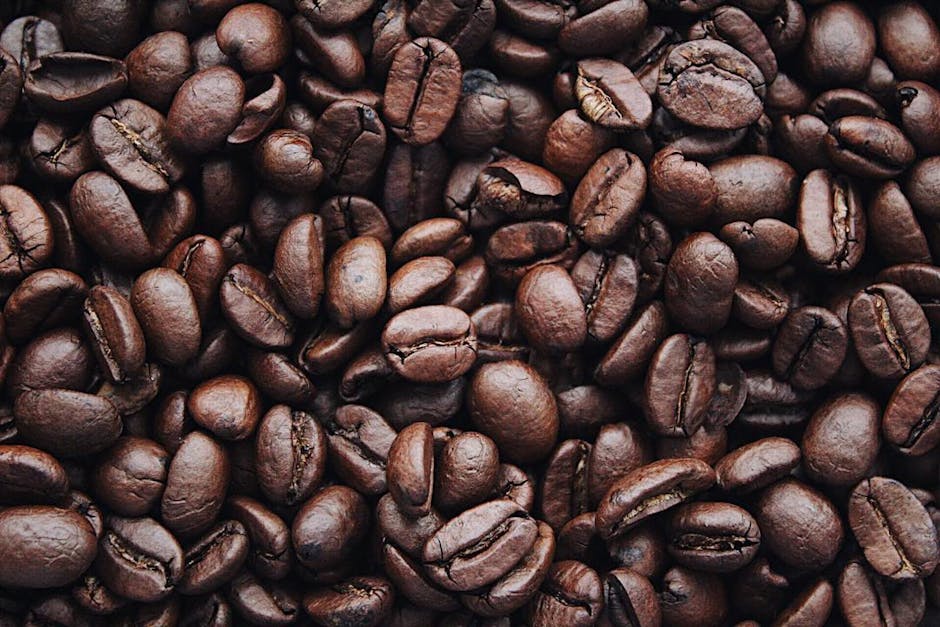
Before I dive into the specifics of my Luwak coffee experience, let's set the stage. Bali, often called the "Island of Gods," isn't just about breathtaking beaches and vibrant temples. It's also a fertile land blessed with ideal conditions for growing coffee. The volcanic soil, high altitude, and tropical climate create the perfect environment for Arabica and Robusta beans to flourish. Traditionally, coffee farming in Bali is a family affair, passed down through generations with deep respect for the land and its resources.
What makes Balinese coffee so special? Well, it's not just one thing. It's the combination of factors, including the unique terroir (the complete natural environment in which a particular coffee is produced, including factors such as the soil, topography, and climate), the traditional farming methods, and the meticulous roasting processes. Balinese coffee often boasts a full-bodied flavor with hints of chocolate, nuts, and a subtle earthy sweetness. But, trust me, the real magic happens when you explore the plantations and witness the entire process firsthand.
Embarking on a Coffee Plantation Tour
My Balinese coffee adventure began with a guided tour of a local plantation nestled in the hills of Ubud. There are numerous plantations to choose from, ranging from small, family-run operations to larger, more commercial ventures. I opted for a smaller, family-run plantation because I wanted a more authentic and intimate experience. The moment I stepped onto the grounds, I was greeted by the warm smiles of the family members who owned and operated the plantation. The air was thick with the intoxicating aroma of roasting coffee beans, and the vibrant green foliage created a truly captivating atmosphere.
The tour started with an informative walk through the coffee plants themselves. Our guide, a cheerful young man named Ketut, explained the entire life cycle of the coffee bean, from the delicate white flowers to the ripe red cherries. He showed us the different varieties of coffee plants grown on the plantation, including Arabica, Robusta, and even a few rare local species. I learned about the traditional farming practices, such as shade-grown coffee cultivation, which helps protect the coffee plants from the harsh sun and promotes biodiversity. It was fascinating to see how every aspect of the process was carefully managed to ensure the highest quality coffee beans.
The Curious Case of Luwak Coffee

Now, let's talk about the star of the show: Luwak coffee, also known as civet coffee. You might have heard about it – it's the coffee that's been partially digested by a civet cat. Yes, you read that right. The Asian palm civet, a small, nocturnal mammal native to Southeast Asia, plays a crucial role in the production of this unique (and expensive) coffee. Let's delve deeper into the process:
- The Civet's Choice: The civets are naturally drawn to the ripest, juiciest coffee cherries. They consume the cherries, but their digestive system can't fully break down the coffee beans.
- A Natural Fermentation: As the beans pass through the civet's digestive tract, they undergo a natural fermentation process. Enzymes in the civet's stomach break down certain proteins and fats, which is said to alter the flavor profile of the coffee.
- The Collection: The undigested coffee beans are then collected from the civet's droppings.
- The Cleaning Process: The collected beans undergo a thorough cleaning and washing process to remove any remaining impurities.
- The Roasting: Finally, the cleaned beans are roasted to perfection, just like any other coffee bean.
The resulting Luwak coffee is known for its smooth, less bitter flavor and its complex aroma. The fermentation process is believed to reduce the acidity of the coffee and enhance its sweetness. However, it's important to note that the quality and flavor of Luwak coffee can vary greatly depending on the source and the methods used to produce it.
My Luwak Coffee Tasting Experience

The moment of truth had arrived. I was presented with a small cup of freshly brewed Luwak coffee. The aroma was intoxicating – a rich, earthy fragrance with hints of chocolate and caramel. I took a tentative sip, and my taste buds were immediately awakened. The coffee was incredibly smooth, with a surprisingly low acidity. It had a subtle sweetness and a complex flavor profile that I couldn't quite put my finger on. It was definitely unlike any other coffee I had ever tasted.
Was it worth the hype? Honestly, it's a matter of personal preference. I enjoyed the experience, and I appreciated the unique flavor profile of the Luwak coffee. However, I'm not sure I would say it's drastically superior to other high-quality Arabica coffees. The main draw, for me, was the novelty of the experience and the opportunity to learn about the fascinating process behind it.
Ethical Considerations: A Crucial Aspect

Before you rush out to try Luwak coffee, it's essential to consider the ethical implications. The high demand for Luwak coffee has led to some unethical practices, such as:
- Caging Civets: In some cases, civets are kept in small, unsanitary cages and force-fed coffee cherries. This is a cruel and inhumane practice that should be avoided at all costs.
- Mislabeling: There have been reports of unscrupulous vendors selling regular coffee as Luwak coffee to increase their profits.
To ensure you are making an ethical choice, it's crucial to do your research and choose a reputable plantation that prioritizes the welfare of the civets. Look for plantations that allow the civets to roam freely in their natural habitat and that use humane farming practices. Ask questions about the origin of the coffee and the methods used to produce it. If you have any doubts, it's best to err on the side of caution and choose a different coffee option.
During my visit, I specifically chose a plantation that emphasized ethical practices. The civets were allowed to roam freely within a large, forested area. They weren't confined or force-fed. The plantation owners explained that they collected the civets' droppings naturally and ensured the animals' well-being. This made me feel much more comfortable about the experience.
Beyond Luwak: Exploring Other Balinese Coffees

While Luwak coffee may be the most famous Balinese coffee, it's by no means the only one worth trying. During my plantation tour, I had the opportunity to sample a variety of other locally grown coffees, each with its unique flavor profile.
Here are a few of my favorites:
- Bali Arabica: Grown in the higher altitudes of Bali, Arabica coffee is known for its bright acidity, floral aroma, and complex flavor. It often has notes of citrus, chocolate, and nuts.
- Bali Robusta: Robusta coffee is more robust and has a higher caffeine content than Arabica. It has a bolder, more earthy flavor with a slightly bitter aftertaste.
- Bali Kintamani Coffee: This coffee is grown in the Kintamani region of Bali, known for its volcanic soil and cool climate. It has a unique citrusy flavor and a smooth, creamy body. The unique flavor comes from the usage of a wet-hulling process that brings out a distinctive body.
- Bali Peaberry Coffee: Peaberry coffee is a mutation where only one round bean grows inside the coffee cherry instead of two flat-faced beans. These beans are thought to be more flavorful as they receive all the nutrients from the cherry. The peaberry will be sorted during the process and roasted separately.
- Vanilla Coffee: Several farms now grow vanilla bean to add to their harvest. This produces a subtly sweet flavor that is an enjoyable change of pace from regular beans.
I also had the chance to try several flavored coffees, such as vanilla coffee, coconut coffee, and ginger coffee. These were all delicious and provided a fun twist on traditional Balinese coffee. I bought a few bags to take home as souvenirs, and they were a big hit with my friends and family.
The Traditional Balinese Coffee-Making Process

One of the most fascinating aspects of my plantation tour was learning about the traditional Balinese coffee-making process. From harvesting to roasting, every step is done with meticulous care and attention to detail. The process generally includes:
- Harvesting: The ripe coffee cherries are hand-picked by local farmers.
- Pulping: The outer layer of the coffee cherry is removed using a hand-cranked pulping machine.
- Fermentation: The beans are fermented in water for several hours to remove the remaining mucilage (a sticky layer that surrounds the beans).
- Washing: The fermented beans are washed thoroughly to remove any remaining impurities.
- Drying: The beans are sun-dried on raised platforms for several days. This process helps to reduce the moisture content of the beans and develop their flavor.
- Hulling: The dried parchment layer (the thin layer of skin that surrounds the beans) is removed using a hulling machine.
- Sorting: The beans are sorted by hand to remove any defective or damaged beans.
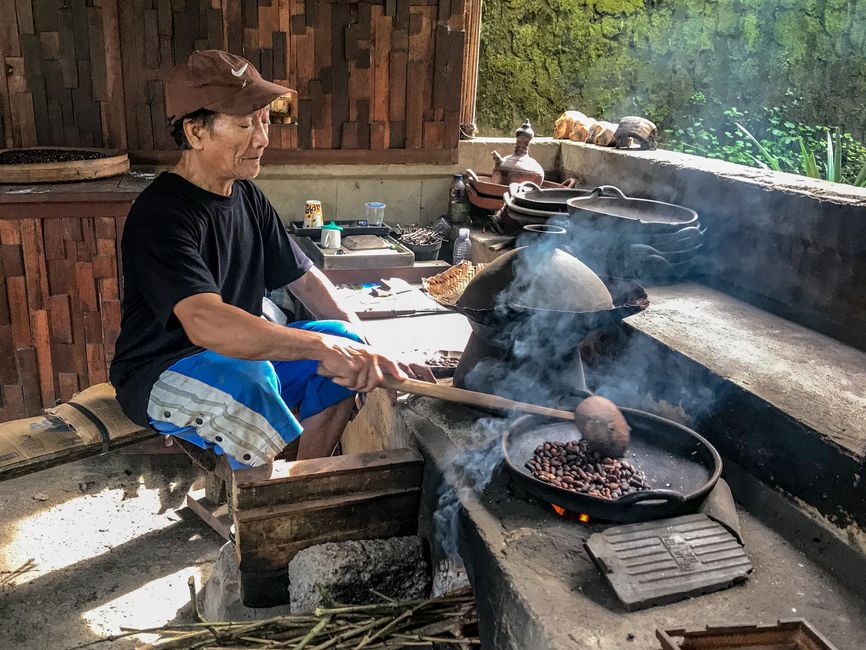
- Roasting: The sorted beans are roasted in small batches over an open fire. The roasting process is carefully monitored to ensure that the beans are roasted to the perfect level of darkness.
Watching the farmers meticulously sort the beans and roast them over an open fire was a truly humbling experience. It gave me a newfound appreciation for the hard work and dedication that goes into producing a single cup of coffee.
More Than Just Coffee: A Cultural Immersion

My visit to the Balinese coffee plantations was more than just a coffee tasting experience; it was a cultural immersion. I had the opportunity to learn about the Balinese way of life, connect with local people, and experience the beauty of the Balinese countryside. The plantation owners were incredibly welcoming and shared their stories and traditions with me. I learned about their family history, their farming practices, and their deep connection to the land. It was a truly enriching experience that I will never forget.
Many plantations also offer other activities, such as cooking classes, traditional Balinese massage, and guided walks through the surrounding rice paddies. I took advantage of the cooking class and learned how to prepare several traditional Balinese dishes. It was a fun and interactive way to learn about Balinese cuisine and culture. I also enjoyed a relaxing Balinese massage, which helped to soothe my muscles after a long day of exploring the plantations.
Tips for Planning Your Own Coffee Plantation Tour

If you're planning a trip to Bali and want to experience the magic of the coffee plantations for yourself, here are a few tips to keep in mind:
- Do Your Research: Before you book a tour, research the different plantations and choose one that aligns with your values. Look for plantations that prioritize ethical practices and offer authentic cultural experiences.
- Book in Advance: Coffee plantation tours can be popular, especially during peak season. It's best to book your tour in advance to avoid disappointment.
- Dress Comfortably: Wear comfortable shoes and clothing, as you will be doing a lot of walking.
- Bring Cash: Many plantations may not accept credit cards, so it's a good idea to bring cash with you.
- Ask Questions: Don't be afraid to ask questions about the coffee-making process, the farming practices, and the local culture.
- Be Respectful: Remember that you are visiting a place of cultural significance. Be respectful of the local customs and traditions.
- Be Open to New Experiences: Be open to trying new coffees, learning about different cultures, and connecting with local people.
Beyond the Plantation: Coffee in Balinese Culture
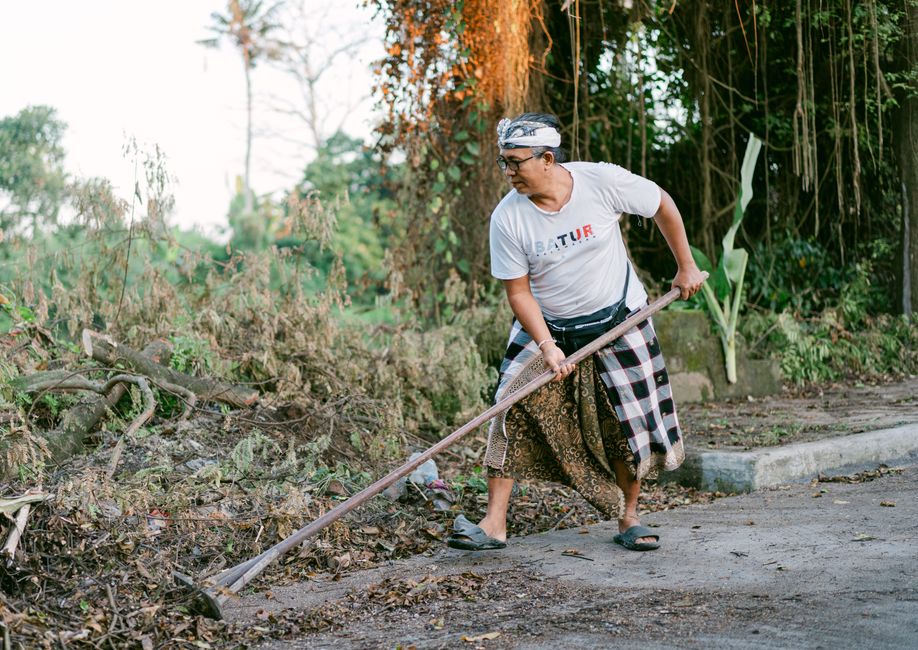
Coffee isn't just a beverage in Bali; it's deeply woven into the fabric of Balinese culture. It's often served during ceremonies, offered to guests as a sign of hospitality, and enjoyed as a daily ritual.
One of the most common ways to enjoy coffee in Bali is "Kopi Bali," a strong, dark brew served with a generous amount of sugar. It's often enjoyed in small warungs (local restaurants) or at home, shared with friends and family. The act of sharing a cup of coffee is seen as a way to connect with others and foster a sense of community.
You'll also find coffee being sold at local markets, along with a variety of other Balinese products, such as spices, fruits, and handicrafts. Visiting a local market is a great way to experience the vibrant culture of Bali and support local farmers and artisans.
Bringing Bali Home: Coffee as a Souvenir
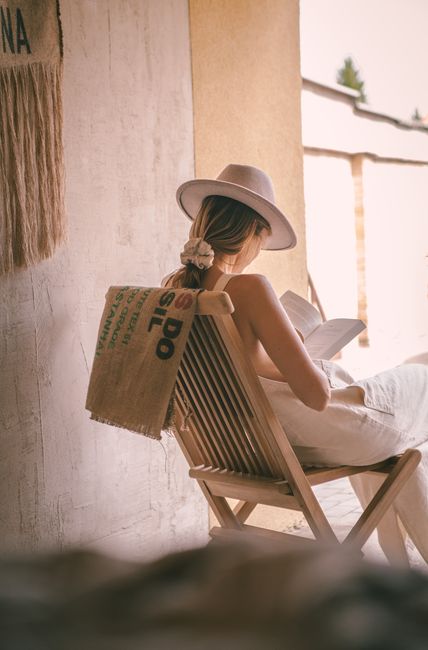
One of the best souvenirs you can bring back from Bali is, of course, coffee! Buying coffee directly from the plantation or a local market is a great way to support the local economy and enjoy a taste of Bali long after you've returned home. Just be sure to store your coffee properly in an airtight container to preserve its freshness.
I brought back several bags of Bali Arabica, Bali Robusta, and even some flavored coffees. Every time I brew a cup, it brings back memories of my incredible journey to the Balinese coffee plantations. It's a reminder of the beauty of Bali, the warmth of the Balinese people, and the magic of a perfectly brewed cup of coffee.
Final Thoughts: A Journey for Coffee Lovers

My journey to Bali's coffee plantations was an unforgettable experience that completely transformed my perspective on coffee. It wasn't just about tasting Luwak coffee (although that was definitely a highlight); it was about immersing myself in the culture, connecting with local people, and appreciating the hard work and dedication that goes into producing a single cup of coffee.
If you're a coffee lover or simply looking for a unique and enriching travel experience, I highly recommend adding Bali's coffee plantations to your bucket list. It's an adventure for your senses, a cultural immersion, and a chance to experience the true essence of Bali.
So, pack your bags, grab your coffee mug, and get ready for an unforgettable journey to the "Island of Gods"! You won't be disappointed!
Post a Comment