Water Temples of Ubud: A Journey of Cleansing at Tirta Empul and Goa Gajah

Water Temples of Ubud: A Journey of Cleansing at Tirta Empul and Goa Gajah
Hey friend! Let's talk about something truly magical: water temples in Ubud, Bali. Specifically, I want to share my experiences at Tirta Empul and Goa Gajah, two incredibly special places that offer a glimpse into the spiritual heart of Balinese culture. If you're planning a trip to Ubud, or even just dreaming of one, these temples should absolutely be on your list. Prepare to be amazed by the beauty, history, and profound sense of peace you'll find there.
Tirta Empul: Cleansing Body and Soul

Tirta Empul, which translates to "holy spring," is probably the most famous water temple in Bali. It's not just a tourist attraction; it's a living, breathing spiritual center where Balinese Hindus come to purify themselves in the sacred waters. And trust me, experiencing it is unlike anything else. When I first arrived, I was immediately struck by the sheer beauty of the place. Lush greenery surrounds the temple complex, and the air hums with a palpable sense of reverence. The sounds of trickling water and gentle chanting create a truly calming atmosphere.
The main attraction, of course, is the holy spring. This spring feeds several purification pools, each lined with spouts where devotees line up to cleanse themselves. Before entering the water, I learned that it's important to understand the proper etiquette. You'll need to wear a sarong (which you can rent at the entrance) and a sash. Also, be mindful of your behavior; keep your voice down and avoid pointing your feet towards the shrines.
Here's how the purification ritual typically works:
- Offerings: First, you'll make an offering (canang sari) at the temple before entering the pools. This is a gesture of respect and gratitude to the gods.
- Entering the Water: Step into the first pool, feeling the cool, crystal-clear water wash over you.
- Under the Spouts: Move from spout to spout, positioning yourself so the water flows over your head and body. Each spout is believed to cleanse a different aspect of your being. There's one spout specifically for removing curses, which you'll want to skip initially. It's generally used at the end if you suspect you have one.
- Respect and Intention: As you cleanse, focus on your intentions. Release any negative thoughts, emotions, or energies. Allow the water to wash them away.
- The Final Pool: After cleansing under each spout in the main pool, you can move to a final pool for prayer and meditation.
My own experience at Tirta Empul was deeply moving. The water was incredibly refreshing, and as I stood under each spout, I felt a sense of release and renewal. It wasn't just about washing away physical dirt; it felt like a deep cleansing of my spirit. It's truly something you have to experience to understand. I left feeling lighter, more centered, and incredibly grateful for the opportunity to participate in such a sacred ritual.
Tips for visiting Tirta Empul:
- Go Early: Arrive as early as possible to avoid the crowds. The temple opens around 7:00 AM.
- Dress Respectfully: As mentioned, you'll need a sarong and sash. These are usually available for rent at the entrance.
- Be Mindful: Observe the customs and traditions of the temple. Avoid loud talking and disruptive behavior.
- Bring a Towel: You'll want to dry off after the purification ritual.
- Consider a Guide: A guide can provide valuable insights into the history and significance of the temple.
- Leave a Donation: It's customary to leave a small donation at the temple.
Goa Gajah: The Elephant Cave
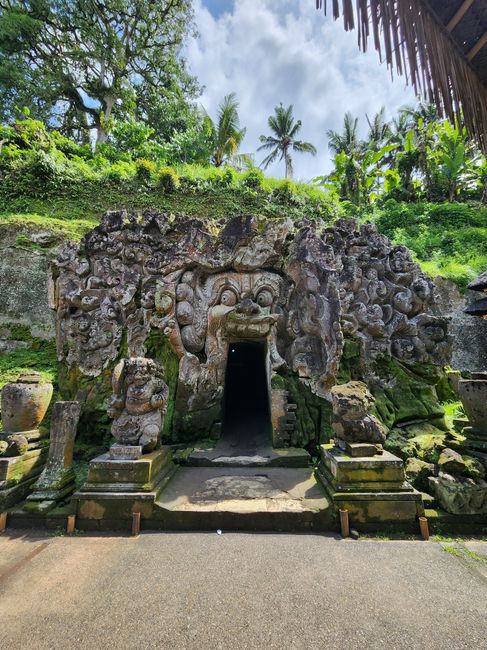
Now, let's venture over to Goa Gajah, also known as the Elephant Cave. Don't get confused; there aren't any actual elephants living in this cave! The name "Elephant Cave" is a bit of a mystery. Some believe it refers to the elephant-faced son of Shiva, Lord Ganesha, whose statue is found inside. Others think the name comes from the nearby Elephant River or a historical connection to elephant worship. Whatever the origin, Goa Gajah is a fascinating blend of Hindu and Buddhist influences.
Unlike Tirta Empul, which is all about purification and water, Goa Gajah is more of a cave sanctuary. The entrance to the cave is the main attraction. It's carved into a rock face and depicts a monstrous face, often interpreted as a demon. Stepping through this mouth-like entrance feels like entering another world.
Inside the cave, you'll find:
- Lord Ganesha: A statue of Lord Ganesha, the Hindu god of wisdom and remover of obstacles.
- Lingam: Several lingam, phallic symbols representing Lord Shiva, and yoni, representing the divine feminine.
- Meditation Niches: Small niches that were likely used for meditation by monks.
The cave itself is relatively small, but the atmosphere is incredibly powerful. The dim lighting and the ancient carvings create a sense of mystery and reverence. Imagine the monks who once meditated in this very space! It's humbling.
Beyond the cave, Goa Gajah boasts beautiful grounds with lush gardens, ancient relics, and bathing pools. The bathing pools, discovered in the 1950s, feature statues of female figures holding water spouts. These figures are believed to represent the seven holy rivers of India, further highlighting the Hindu influence on the site.
Exploring the grounds of Goa Gajah is like taking a step back in time. You'll find ancient stone carvings, meditation caves, and peaceful spots to sit and contemplate. The whole place exudes a sense of tranquility and spiritual energy.
My Experience at Goa Gajah:
Visiting Goa Gajah was a completely different experience compared to Tirta Empul. While Tirta Empul was about active participation and cleansing, Goa Gajah felt more like a place of reflection and contemplation. The cave itself was awe-inspiring, and I spent a long time just soaking in the atmosphere and imagining the history that had unfolded within its walls. Wandering through the gardens and discovering the ancient relics was like embarking on a treasure hunt. I left Goa Gajah feeling grounded and connected to something larger than myself. It really provided a deep dive into Balinese history.
Tips for visiting Goa Gajah:
- Dress Respectfully: As with Tirta Empul, you'll need to dress modestly. Sarongs and sashes are often available for rent.
- Be Aware of Your Surroundings: The cave can be a bit slippery, so wear comfortable shoes.
- Take Your Time: Allow plenty of time to explore the entire site, including the cave, gardens, and bathing pools.
- Consider a Guide: A guide can provide valuable insights into the history and significance of Goa Gajah.
- Be Respectful of the Monks: If you see monks meditating or praying, give them space and avoid disturbing them.
- Take Photos Responsibly: Be mindful of flash photography, which can damage the ancient carvings.
Comparing Tirta Empul and Goa Gajah: Two Sides of the Same Coin

While both Tirta Empul and Goa Gajah are considered water temples, they offer distinct experiences. Tirta Empul is all about purification and active participation, while Goa Gajah is more about reflection and historical exploration. Think of it this way:
- Tirta Empul: Cleansing, renewal, active participation, water purification.
- Goa Gajah: History, reflection, contemplation, ancient carvings, cave sanctuary.
Visiting both temples provides a well-rounded understanding of Balinese spirituality and culture. One focuses on the present moment and the cleansing of the self, while the other connects you to the past and the enduring power of ancient traditions. I honestly can't say which one I liked better; they both resonated with me in different ways. They both left me feeling deeply connected to Balinese culture.
Beyond the Temples: Ubud's Spiritual Heart

Tirta Empul and Goa Gajah are just two examples of the many sacred sites that dot the landscape of Ubud. This region is known as the cultural heart of Bali, and for good reason. Everywhere you go, you'll encounter temples, shrines, and ceremonies that reflect the deep spiritual beliefs of the Balinese people. The rice paddies are blessed, the houses have shrines to protect the families, and even the roads have small offerings to appease the spirits. It truly is a land steeped in spirituality.
While you're in Ubud, consider exploring some of the other temples and sacred sites, such as:
- Pura Taman Saraswati: A beautiful water temple dedicated to the goddess of knowledge, Saraswati.
- Gunung Kawi: An ancient temple complex with impressive rock-cut shrines.
- Tegenungan Waterfall: A stunning waterfall surrounded by lush jungle, often used for purification rituals.
But the spiritual heart of Ubud isn't just about temples and monuments. It's also about the people, their traditions, and their unwavering faith. Take the time to connect with the local culture. Attend a traditional dance performance, learn how to make a canang sari offering, or simply strike up a conversation with a local. You'll be amazed by the warmth, generosity, and deep spiritual wisdom you encounter. I spent an afternoon learning to make offerings with a local family, and it was one of the most rewarding experiences of my trip. It really helped me understand the meaning behind the beautiful offerings I saw everywhere.
Final Thoughts: A Journey of Discovery
Visiting Tirta Empul and Goa Gajah was more than just sightseeing; it was a journey of discovery, both inward and outward. I learned about the rich history and culture of Bali, but I also learned about myself. The purification ritual at Tirta Empul helped me release negative energy and connect with my inner self. The ancient carvings at Goa Gajah reminded me of the enduring power of human spirituality. If you're looking for a truly meaningful and transformative travel experience, I highly recommend adding these water temples to your Ubud itinerary. You won't regret it! I hope this inspires you to visit and experience the magic yourself. Let me know if you have any other questions; I'd love to help you plan your trip!
Post a Comment